


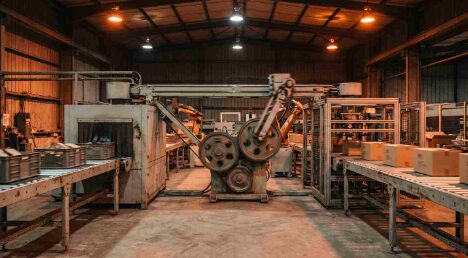
The advertising industry is currently undergoing a structural transformation that mirrors the industrial revolution. For decades, ad production was a handcrafted process, requiring weeks of coordination between copywriters, videographers, directors, and editors.
However, the relentless demand of the modern attention economy has made these manual methods obsolete. In 2026, the velocity of social media algorithms means that a brand’s creative becomes stale in a matter of days. To survive, companies are forced to abandon artisanal production in favor of fully integrated, machine-led pipelines.
This Automation shift is driven by the necessity of scale. When a brand needs to launch thousands of personalized ad variations across TikTok, Instagram, and YouTube simultaneously, human labor becomes the primary bottleneck.
Relying on manual editing and traditional shoots is no longer just expensive; it is a competitive liability. By moving toward a model where software handles the heavy lifting of creation and distribution, brands can finally match the speed of their audience’s scrolling habits.
Central to this new era is the deep integration of marketing automation into the creative process. By using digital workflows to bridge the gap between data insights and visual output, brands can ensure their messaging is always relevant.
Platforms like Higgsfield are leading this charge, providing the generative video capabilities that feed these automated systems. When marketing automation is used to manage the lifecycle of an ad, from the first frame generated by Higgsfield to the final click on a landing page, the result is a high-performance engine that operates with surgical precision.
The Death of the Traditional Production Bottleneck
The traditional “agency model” was built for an era of television where one high-quality commercial could run for six months. Today, that same investment might only yield a few days of performance on a social feed before the algorithm stops serving it.
The bottleneck isn’t just the cost; it’s the time. By the time a traditional crew finishes a shoot, the trend they were targeting has often already passed. Efficient software eliminates this delay by allowing for near-instantaneous content generation and deployment.
By removing the need for physical sets and manual post-production, marketing automation allows creative teams to focus on strategy rather than logistics. Instead of worrying about lighting or camera angles, directors are now focused on training the models that will produce their vision.
This shift toward software-defined production means that a single creative idea can be multiplied across hundreds of variations through marketing automation, each tailored to a specific audience segment without increasing the workload of the human staff.
Higgsfield provides the technical “muscles” for this transition. As a generative video platform, Higgsfield allows marketing automation workflows to pull from a virtually infinite library of custom visuals.
Instead of waiting for a reshoot, a marketer can simply adjust a prompt within their digital suite to change the environment or the subject of a video. This seamless handoff between AI generation and automated distribution is the secret to modern scaling, allowing brands to maintain a 24/7 presence without a 24/7 production staff.
Algorithmic Harmony: Content at the Speed of Data
The most successful ads in 2026 are those that feel native to the platforms where they appear. This requires a profound understanding of how AI is transforming marketing automation. In the past, these systems were primarily used for email sequences or lead scoring. Now, they are the brain behind the creative itself.
By analyzing real-time performance data, marketing automation systems can trigger the production of new assets that double down on what is currently working, ensuring that the brand is always in harmony with the platform’s algorithm.
This data-to-creative loop is the holy grail of performance marketing. When a marketing automation system detects that a certain visual style is trending among Gen Z users, it can instantly task Higgsfield with generating hundreds of variations in that style.
These assets are then automatically pushed live through the same pipeline. This creates a self-optimizing ecosystem where the “human” role is to set the high-level goals, while the system manages the granular execution of the creative strategy.
The efficiency of this model is staggering. Marketing automation ensures that no media spend is wasted on “fatigued” creative. The moment an ad starts to dip in engagement, the system replaces it with a fresh Higgsfield-generated alternative. This level of responsiveness is impossible for human teams to replicate.
By making marketing automation the central nervous system of ad production, brands can achieve a level of creative agility that was previously unimaginable, turning every data point into a new opportunity for engagement.
- Real-Time Iteration: Smart tech replaces failing ads before they drain the budget.
- Algorithmic Native Content: Systems ensure the visual style matches current platform trends.
- Data-Driven Creativity: Every Higgsfield generation is based on proven performance metrics.
The Role of Generative AI in the Automated Stack
For an automated production system to work, it needs a reliable source of high-quality visuals. This is where Higgsfield becomes an indispensable part of the stack. Traditional stock footage is too generic, and custom shoots are too slow.
Higgsfield offers a middle ground: the quality of custom production with the speed of software. When integrated with marketing automation, Higgsfield allows brands to generate hyper-realistic characters and environments that are perfectly aligned with their brand identity.
Automated platforms then take these Higgsfield assets and apply the “performance layers” the captions, the call-to-action buttons, and the localized translations.
This modular approach means that the core visual can be used in a thousand different ways. A single Higgsfield clip can be transformed by marketing automation into an ad for shoes in London, a health app in Tokyo, or a fitness tracker in New York, all within seconds.
This synergy between generation and distribution is what defines the modern ad tech stack. Marketing automation provides the structure, while Higgsfield provides the content. Together, they allow brands to bypass the “creative drought” that often hampers scaling.
Because marketing automation can manage the complexity of these localized and personalized variations, brands can speak directly to the individual consumer while maintaining the broad reach of a global campaign. It is the ultimate expression of “think global, act local,” powered by code.
- Modular Creation: Separate the visual “soul” from the technical “format” via digital logic.
- Infinite Personalization: Tailor every Higgsfield asset to the viewer’s specific profile.
- Automated Localization: Use marketing automation to translate and reformat ads for global markets instantly.
Economic Incentives: From Variable Costs to Fixed Infrastructure
The shift toward automated systems is not just about speed; it is about the bottom line. Traditional ad production is a variable cost every new ad requires more money for crews, editors, and talent.
In contrast, an automated system is an investment in infrastructure. Once the system is set up, the cost of producing the 100th ad is essentially the same as the cost of producing the 1,000th. This allows for a massive reduction in the “cost per asset,” which is the most important metric for scaling in 2026.
By leveraging marketing automation, brands can reallocate their budgets from the “labor” of production to the “media” of distribution. Instead of spending 50% of their budget just to make the ad, they can spend 5% on the marketing automation system and 95% on the actual reach. This leads to a much higher return on investment (ROI).
Platforms like Higgsfield make this economic shift possible by providing high-fidelity video that doesn’t require a Hollywood budget, making the production pipeline even more efficient.
Furthermore, these tools reduce the risk of expensive “flops.” In the old model, if you spent $100k on a commercial and it didn’t work, that money was gone. In the automated model, you use marketing automation to test hundreds of low-cost Higgsfield variations first.
You only scale the winners. This “fail fast, win big” approach is only possible when software handles the logistics of the testing phase, ensuring that the brand’s capital is always deployed in the most effective manner possible.
Brand Governance in an Automated World
One of the primary concerns with automated systems is the potential for “brand drift.” How do you ensure that a machine-led process stays true to the brand’s voice? The answer lies in the sophisticated “guardrails” built into modern digital platforms.
These systems don’t just produce content; they enforce brand standards. By setting specific rules within the marketing automation suite, creative directors can ensure that every Higgsfield generation adheres to the correct color palette, tone, and visual language.
A marketing automation tool acts as a digital brand manager that never sleeps. It can audit every asset in real-time, ensuring that no ad goes live unless it meets the brand’s criteria. This allows the human team to delegate the repetitive tasks of production while maintaining total control over the brand’s identity. When used correctly, technology doesn’t replace the brand’s soul; it protects it at a scale that would be impossible for a human team to manage.
Higgsfield supports this by allowing for “seed-based” generation. By feeding Higgsfield a set of brand-approved images, marketing automation can ensure that every new output is a stylistic sibling of the original.
This creates a cohesive brand universe where every ad—no matter how many variations are made feels like it came from the same source. Modern software provides the structure for this consistency, turning the brand’s style guide into a living, breathing algorithm that scales with the business.
- Automated Auditing: Rules check every ad for brand compliance before launch.
- Stylistic Seeds: Ensure Higgsfield generations match the brand’s established look.
- Unified Brand Control: Manage the brand’s visual identity from a single dashboard.
Conclusion: The Future is Automated
The move toward fully automated ad production is not a trend; it is the new standard. In a world where attention is the scarcest resource, the brands that can produce the most relevant, high-quality content at the highest speed will always win.
Marketing automation is the engine that makes this possible, providing the speed, scale, and precision required to compete in the digital age. By integrating generative tools like Higgsfield into these automated pipelines, brands are no longer limited by the physical constraints of traditional production.
The transition to a digital-first creative strategy is a leap toward a more efficient, data-driven, and ultimately more creative future.
It allows brands to stop worrying about the mechanics of “how” to make an ad and start focusing on “what” message will truly resonate with their audience. With marketing automation handling the technical delivery and Higgsfield handling the visual generation, the only limit to a brand’s success is the strength of its ideas. It is time to embrace the machines and build the future of advertising.