


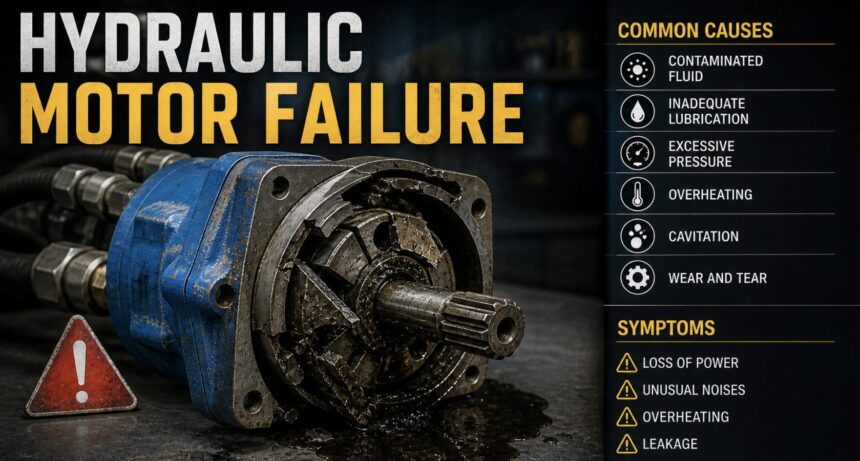
The heavy machinery used in factories is dependent on the hydraulics to keep everything working smoothly. Once the hydraulic motors break down, this leads to abrupt halt of production lines, missed deadlines and expensive equipment repairs. In order to extend the life expectancy of equipment, one needs to identify what makes it degrade. It allows facility managers to introduce preventative measures that keep the entire production process in order.
Common Causes of Hydraulic Motor Failures
Contamination
This is the primary enemy of hydraulics. Contamination means introduction of different substances such as dirt, water, or air in the fluid. Once the liquid gets contaminated, its quality deteriorates drastically. For instance, particulates cause extreme abrasive wear of metal surfaces. At the same time, water leads to corrosion and degradation of important parts. On the other hand, presence of air results in unpredictable system behavior and more wear of internal parts. Regular filtration is an effective way of avoiding this problem.
Overheating
If the motor becomes extremely hot, its performance decreases dramatically. In addition, friction caused by improper lubrication, high pressure in the hydraulic system, and inefficient cooling mechanisms lead to overheating. Once this process starts, the liquid thins and loses its lubricant capabilities.
Also, the temperature bakes and hardens rubber seals which immediately lead to leaks and failure of the system. Regular monitoring and control of motor temperature can help to overcome this issue. If you encounter problems, hydraulic motor repair in Houston, TX, will get you back up and running.
Improper Fluid Viscosity
Using the right type of fluid in the hydraulic system is of crucial importance for efficient functioning. If the viscosity is too high, the system works under more strain and friction increases, leading to excessive heat. On the contrary, low fluid viscosity does not provide proper layer of lubrication between mechanical parts that results in direct metal contact. Therefore, the manager should always use exact viscosity of the fluid recommended by the equipment producer.
Wear and Tear
As any mechanical device, the hydraulic motor experiences wear and tear. However, increased wear often indicates problems with some parts of the structure. One of the most common types is abrasive wear. As discussed above, it appears due to contamination with particles that cause friction and scraping on metal surfaces. Mechanical fatigue and erosion take place when metal parts become overstrained and start experiencing additional tension. Inspections help to detect it at the initial stage.
Misalignment and Installation Problems
Any motor installation should follow strict requirements to ensure longevity. Misalignment of the shaft and the load leads to excessive side pressure placed on bearings and shafts. Eventually, the parts become unevenly worn, and vibrations result in breaking of the shaft. For this reason, only specialists using appropriate tools should install hydraulics with precise alignment and without any mistakes.
Cavitation
This arises when the hydraulic system faces lack of inlet pressure or excess velocity of the fluid. Under such circumstances, small gas bubbles appear in the system. Once these bubbles move through high-pressure areas, they explode and create micro-explosions. They hit metallic surfaces and scrape tiny pieces off them, thus damaging the internal components and completely ruining the whole structure. Ensuring constant fluid supply with proper settings prevents cavitation completely.
Protect Your Equipment with Preventative Measures
Ignoring symptoms of malfunction and wear and tear eventually result in destruction of the machinery. In order to avoid such situation and protect expensive equipment, you need to pay close attention to the quality of your equipment. You may take the following steps now in order to increase the life expectancy of hydraulic motors:
- Perform regular fluid analysis
- Constantly monitor motor temperature
- Always use precision tools and proper alignment techniques when installing