

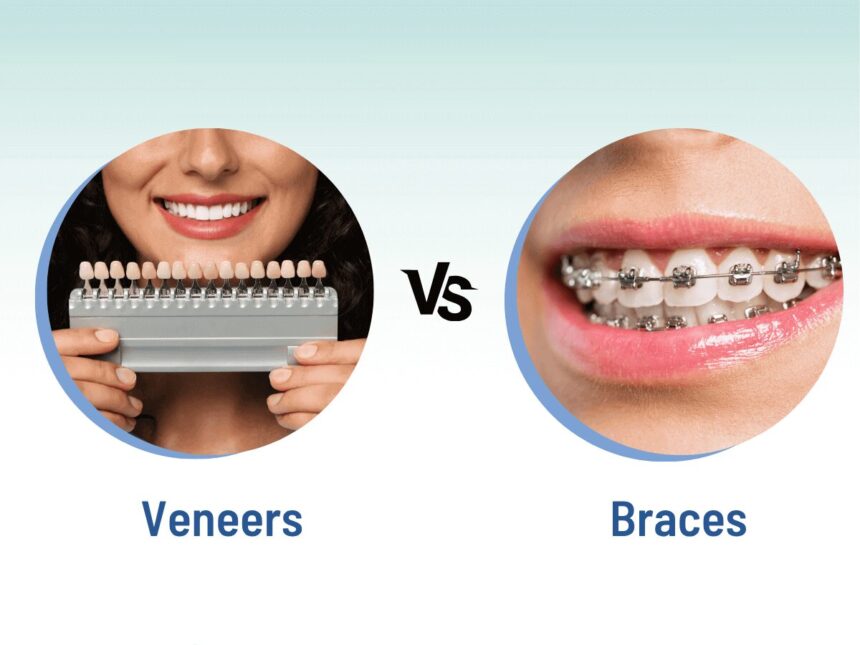
A beautiful smile plays a major role in confidence, appearance, and overall self-esteem. Modern dentistry offers several solutions to improve dental aesthetics, and two of the most popular options are veneers and braces. While both treatments enhance smiles, they serve very different purposes.
Many people feel confused when choosing between veneers and braces because both can correct visible dental imperfections. However, the right choice depends on your dental condition, goals, budget, and long-term expectations. This detailed guide explains the differences, benefits, and limitations of veneers and braces to help you decide which option is best for your smile.
Understanding Dental Veneers
Dental veneers are thin, custom-made shells usually made from porcelain or composite resin. They are bonded to the front surface of teeth to improve appearance instantly.
Veneers are primarily a cosmetic treatment designed to enhance how teeth look rather than change their position.
Problems Veneers Can Fix
Veneers are commonly used to correct:
- Discolored or stained teeth
- Minor chips or cracks
- Small gaps between teeth
- Slightly uneven or irregular teeth
- Worn-down enamel
Because veneers cover the visible surface, they create a brighter and more symmetrical smile.
How the Veneer Procedure Works
The process typically involves:
- Dental consultation and smile assessment
- Slight enamel reshaping
- Impressions of teeth
- Custom veneer fabrication
- Permanent bonding to teeth
The entire treatment usually takes two to three dental visits.
Understanding Braces
Braces are orthodontic devices used to gradually move teeth into proper alignment. Unlike veneers, braces address structural and functional dental issues.
Braces apply continuous pressure over time, shifting teeth and correcting bite problems.
Problems Braces Can Fix
Braces are effective for:
- Crooked or crowded teeth
- Large gaps between teeth
- Overbite or underbite
- Crossbite and misalignment
- Jaw positioning issues
Orthodontic treatment improves both appearance and oral function.
Types of Braces Available
Modern dentistry offers several options:
- Traditional metal braces
- Ceramic braces
- Lingual braces (behind teeth)
- Clear aligners (such as invisible trays)
Treatment duration usually ranges from 12 to 24 months depending on complexity.
Key Differences Between Veneers and Braces
Although both treatments enhance smiles, their purposes differ significantly.
| Feature | Veneers | Braces |
|---|---|---|
| Purpose | Cosmetic improvement | Structural correction |
| Treatment time | 2–3 visits | 12–24 months |
| Tooth movement | No | Yes |
| Permanence | Semi-permanent | Long-term correction |
| Ideal for | Minor imperfections | Alignment problems |
| Maintenance | Normal brushing | Extra care during treatment |
This comparison shows that veneers improve appearance quickly, while braces correct underlying dental alignment.
When Veneers Are the Right Choice
Veneers are ideal for individuals who already have healthy tooth alignment but want cosmetic improvements.
Best Candidates for Veneers
You may benefit from veneers if you have:
- Stained teeth resistant to whitening
- Minor spacing issues
- Small chips or uneven tooth shapes
- Desire for a fast smile makeover
Veneers provide immediate aesthetic results, making them popular for professionals or individuals preparing for special events.
When Braces Are the Better Option
Braces are recommended when dental alignment or bite issues exist. Straightening teeth improves both oral health and appearance.
Best Candidates for Braces
Braces are suitable if you have:
- Crooked or overlapping teeth
- Jaw alignment problems
- Difficulty chewing
- Speech issues caused by bite problems
- Increased risk of cavities due to crowding
Orthodontic treatment addresses the root cause rather than covering imperfections.
Advantages of Veneers
Veneers offer several cosmetic benefits.
Main Benefits
- Instant smile transformation
- Natural-looking results
- Stain-resistant materials
- Minimal treatment time
- Long-lasting appearance (10–15 years with care)
They are often considered a quick solution for smile enhancement.
Advantages of Braces
Braces provide functional and long-term health improvements.
Key Benefits
- Permanently straightened teeth
- Improved bite function
- Easier cleaning between teeth
- Reduced risk of gum disease
- Better long-term oral health
Although treatment takes longer, the results address underlying dental problems.
Cost Comparison: Veneers vs Braces
Costs vary depending on location and treatment complexity, but understanding general differences helps with planning.
| Treatment | Cost Range | Long-Term Value |
|---|---|---|
| Veneers | Higher per tooth | Cosmetic improvement |
| Braces | Higher overall initially | Functional + cosmetic benefits |
Veneers may need replacement over time, while braces typically provide permanent alignment results.
Maintenance and Aftercare
Caring for Veneers
- Avoid biting hard objects
- Maintain regular brushing and flossing
- Attend dental checkups
- Use a night guard if grinding teeth
Caring for Braces
- Avoid sticky or hard foods
- Clean carefully around brackets
- Attend adjustment appointments
- Wear retainers after treatment
Proper maintenance ensures long-lasting results for both options.
Can Veneers and Braces Be Combined?
In some cases, dentists recommend orthodontic treatment first to align teeth properly, followed by veneers for cosmetic refinement. This combination provides both functional correction and aesthetic perfection.
How to Choose the Right Option
Choosing between veneers and braces depends on your goals.
Ask yourself:
- Do I want cosmetic improvement or alignment correction?
- Am I looking for quick results or long-term structural change?
- Is my bite properly aligned?
- What is my budget and time commitment?
A dental consultation is essential to determine the most suitable treatment plan.
Conclusion
Both veneers and braces are excellent dental solutions, but they serve different purposes. Veneers are best for enhancing the appearance of already well-aligned teeth, offering fast and dramatic cosmetic results. Braces, on the other hand, correct alignment and bite issues, improving both oral health and long-term functionality.
The right choice depends on your dental condition and personal goals. Consulting a qualified dentist or orthodontist will help you understand which treatment suits your smile best. Investing in the correct solution not only improves appearance but also supports lifelong dental health and confidence.
FAQs
1. Are veneers better than braces?
Neither is universally better. Veneers are ideal for cosmetic fixes, while braces correct alignment and bite problems.
2. Can veneers straighten teeth without braces?
Veneers can improve the appearance of slightly uneven teeth but do not physically move teeth like braces.
3. How long do veneers last?
Porcelain veneers typically last 10–15 years with proper care.
4. Are braces painful?
Mild discomfort may occur after adjustments, but it usually fades within a few days.
5. Can adults get braces or veneers?
Yes. Both treatments are common and effective for adults seeking smile improvement.