


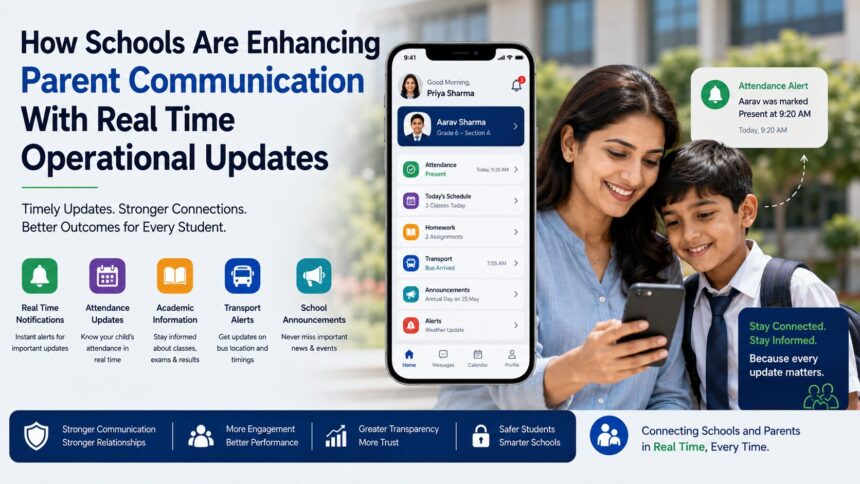
Communication between schools and parents has changed significantly in recent years. Families now expect timely updates regarding attendance, academic activities, schedules, and student progress. Traditional communication methods often create delays and increase administrative workload. To improve engagement and operational transparency, many institutions are adopting school software that helps schools provide faster and more organized communication experiences for parents.
Parents Want Instant Access to Information
Modern parents prefer quick and accessible communication.
Families no longer want to wait for printed notices or delayed phone calls to receive important updates.
Parents expect schools to provide information regarding:
- Student attendance
- Academic schedules
- Examination dates
- Homework reminders
- School announcements
- Transport updates
Educational institutions must now manage communication more efficiently while handling increasing operational demands.
Real-time digital systems help schools meet these expectations more effectively.
Traditional Communication Methods Create Delays
For many years, schools relied heavily on:
- Printed notices
- Manual diaries
- Phone calls
- Emails
- Physical meetings
While these methods still have value, they often create communication gaps.
Printed notices may not reach parents on time. Manual follow-ups also increase workload pressure for school staff.
Important updates can easily get delayed or missed.
As educational institutions expand, these communication challenges become even more difficult to manage.
Schools now require centralized communication systems that improve speed and consistency.
Attendance Alerts Improve Parent Awareness
Attendance remains one of the biggest concerns for parents.
Families want immediate updates when students:
- Arrive late
- Miss classes
- Leave early
- Remain absent
Manual attendance reporting often delays communication and creates confusion.
Modern schools now use automated attendance systems that send instant notifications directly to parents.
Many institutions also integrate a school biometric attendance system to improve attendance accuracy and provide real-time operational visibility.
Biometric systems help schools track attendance more efficiently while reducing manual verification errors.
Parents receive faster and more reliable attendance updates throughout the day.
Communication Builds Stronger Parent Trust
Parents feel more confident when schools communicate regularly and transparently.
Lack of communication often creates frustration and uncertainty.
Real-time updates help schools build stronger relationships with families by improving operational transparency.
When parents receive timely information regarding school activities, they feel more connected to the educational environment.
This improves overall trust between schools and families.
Strong communication also supports better collaboration regarding student development and academic progress.
Schools Are Reducing Administrative Pressure Through Automation
Administrative teams spend significant time handling parent inquiries every day.
Common questions often involve:
- Attendance records
- Examination schedules
- School events
- Homework details
- Transport timing
Manual communication methods increase workload and slow down response times.
Automated digital systems reduce repetitive coordination tasks by providing centralized updates and notifications.
This allows administrative teams to focus more on operational planning and student support services.
Automation improves efficiency while maintaining better communication quality.
Real Time Updates Help During Emergencies
Educational institutions must respond quickly during unexpected situations.
These may include:
- Weather-related closures
- Transport delays
- Medical emergencies
- Schedule changes
- Operational disruptions
Delayed communication during emergencies creates confusion for parents and staff.
Real-time digital communication systems help schools share urgent updates instantly.
Parents can receive immediate notifications regarding operational changes or safety concerns.
This improves institutional responsiveness and strengthens emergency coordination.
Parent Engagement Improves Student Performance
Research and operational experience both show that parent involvement positively affects student development.
When parents remain informed about school activities, they can support students more effectively.
Real-time communication helps parents stay updated regarding:
- Attendance trends
- Academic performance
- Classroom activities
- Behavioral concerns
- Examination preparation
This encourages stronger collaboration between teachers and families.
Students benefit from a more connected support system involving both home and school environments.
Multi Campus Schools Need Centralized Communication
Educational groups operating multiple campuses often struggle with communication consistency.
Different branches may use separate communication methods, creating confusion for parents.
Centralized digital systems help institutions standardize communication across campuses.
Leadership teams can maintain consistent operational updates while allowing campuses to manage local communication independently.
This improves coordination and creates a more organized parent experience throughout the institution.
Teachers Also Benefit From Better Communication Systems
Teachers regularly communicate with parents regarding classroom activities and student progress.
Manual communication methods increase workload pressure and reduce efficiency.
Digital systems help teachers:
- Share assignments quickly
- Send classroom updates
- Communicate attendance concerns
- Schedule meetings efficiently
- Provide academic feedback faster
This reduces repetitive coordination work and improves communication consistency.
Teachers can spend more time focusing on classroom learning and student engagement.
Operational Transparency Is Becoming More Important
Modern educational institutions must maintain stronger transparency across operations.
Parents now expect clear visibility into school activities and student progress.
Real-time communication systems improve operational transparency by centralizing updates and simplifying information sharing.
Schools can maintain organized communication records while improving accessibility for families.
Transparent operations also strengthen institutional credibility and parent confidence.
Mobile Accessibility Has Changed Parent Expectations
Most parents now depend heavily on smartphones for communication and daily coordination.
Educational institutions must therefore provide communication systems that support mobile accessibility.
Digital platforms allow parents to:
- Receive instant notifications
- Review attendance updates
- Access academic schedules
- Read school announcements
- Monitor operational activity
This improves convenience and strengthens engagement between families and schools.
Mobile communication also allows schools to respond more quickly to operational requirements.
Communication Delays Can Affect School Operations
Poor communication often creates operational challenges within educational institutions.
Parents may miss important deadlines or remain unaware of schedule changes.
This increases confusion and creates additional administrative work.
Real-time communication systems reduce these operational gaps by improving the speed and reliability of information sharing.
Schools can coordinate activities more efficiently while improving overall operational organization.
Centralized Information Improves Communication Accuracy
Communication problems often occur because schools maintain disconnected systems and outdated records.
Incorrect parent information may cause missed notifications or delivery failures.
Centralized digital platforms improve communication accuracy by synchronizing information across departments.
When contact information changes, updates become available throughout the institution instantly.
This improves operational reliability and reduces communication errors.
Schools Are Becoming More Digitally Connected
Educational institutions are moving toward more connected operational environments.
Schools now require systems that support:
- Real-time communication
- Attendance monitoring
- Academic coordination
- Administrative planning
- Parent engagement
Digital transformation helps schools centralize these activities while improving operational efficiency.
Institutions adopting connected communication systems gain stronger operational control and improved responsiveness.
Better Communication Supports Long Term Institutional Growth
As schools expand operations and student populations, communication becomes more complex.
Manual systems often struggle to support growing operational demands.
Digital communication platforms provide scalability and flexibility for long-term institutional development.
Schools can maintain communication quality even as operations become larger and more complex.
This supports sustainable growth while improving parent experience and operational coordination.
The Future of Parent Communication in Education
Educational communication is becoming faster, more transparent, and increasingly technology-driven.
Parents now expect schools to provide instant access to operational and academic information.
Educational institutions that modernize communication systems improve both efficiency and family engagement.
Real-time communication also strengthens institutional trust and accountability.
As educational environments continue evolving, connected communication systems will play an even greater role in improving collaboration between schools and families.
Institutions investing in digital communication platforms today are creating stronger and more responsive educational environments for students, parents, teachers, and administrators alike.