

Oral health is not only determined by brushing and flossing habits; what you eat every day plays a major role in the condition of your teeth and gums. Many people focus on external dental care while ignoring the impact of nutrition on oral health. In reality, diet directly influences tooth strength, gum health, saliva production, and the growth of harmful bacteria in the mouth.
Understanding how food choices affect your oral health can help you prevent cavities, gum disease, enamel damage, and even bad breath. This article explains the strong connection between diet and dental health and provides practical guidance for maintaining a healthy smile through proper nutrition.
The Connection Between Diet and Oral Health
Your mouth is the first point of contact for everything you eat and drink. Foods interact with bacteria naturally present in the mouth, creating either a protective or harmful environment.
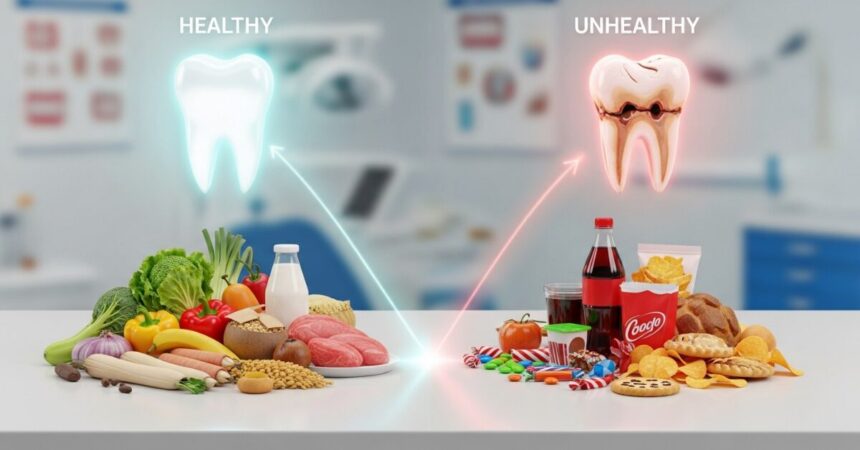
When sugary or acidic foods are consumed, bacteria produce acids that attack tooth enamel. Over time, repeated acid exposure weakens enamel and leads to tooth decay. On the other hand, nutrient-rich foods strengthen teeth and help gums stay healthy.
How Food Impacts Teeth
Diet affects oral health through several mechanisms:
- Provides essential minerals for tooth strength
- Influences saliva production
- Controls bacterial growth
- Supports gum tissue repair
- Maintains oral pH balance
A balanced diet acts as a natural defense system against dental problems.
Foods That Strengthen Teeth and Gums
Certain foods actively protect oral health by supplying vitamins and minerals essential for strong teeth and healthy gums.
Calcium-Rich Foods
Calcium is vital for maintaining enamel and jawbone density.
Examples include:
- Milk and yogurt
- Cheese
- Almonds
- Leafy green vegetables
Cheese is especially beneficial because it increases saliva production and neutralizes acids.
Vitamin D Sources
Vitamin D helps the body absorb calcium effectively. Without it, teeth may become weak.
Good sources:
- Eggs
- Fatty fish
- Fortified dairy products
- Sunlight exposure
Crunchy Fruits and Vegetables
Foods like apples, carrots, and cucumbers act as natural tooth cleaners. Their fibrous texture stimulates saliva, which washes away food particles and bacteria.
Foods Rich in Vitamin C
Vitamin C supports gum health and prevents inflammation.
Examples:
- Oranges
- Strawberries
- Bell peppers
- Tomatoes
Healthy gums provide a strong foundation for teeth.
Foods That Harm Oral Health
While some foods protect teeth, others increase the risk of dental problems.
Sugary Foods and Drinks
Sugar is the primary cause of tooth decay. Bacteria feed on sugar and produce acids that erode enamel.
Common sources include:
- Candy and chocolates
- Soft drinks
- Sweetened tea or coffee
- Cakes and pastries
Frequent snacking on sugary foods is more harmful than occasional consumption because it keeps acid levels high.
Acidic Foods and Beverages
Acids weaken enamel and make teeth sensitive.
Examples:
- Citrus fruits (in excess)
- Soda and energy drinks
- Vinegar-based foods
- Sports drinks
Rinsing your mouth with water after consuming acidic foods can reduce damage.
Sticky and Processed Foods
Sticky foods cling to teeth longer, giving bacteria more time to produce acids.
Examples:
- Dried fruits
- Chips
- Caramel and toffee
These foods are harder to remove through normal saliva flow.
The Role of Saliva in Oral Health
Saliva is a natural protector of your teeth. Diet strongly influences saliva production and quality.
Functions of Saliva
- Neutralizes acids
- Washes away food particles
- Prevents dry mouth
- Supplies minerals to repair enamel
Foods that require chewing, such as raw vegetables and sugar-free gum, stimulate saliva flow and support oral health.
How Frequent Eating Affects Teeth
It’s not only what you eat but how often you eat that matters.
Every time you consume food, especially carbohydrates or sugar, acid attacks begin and may last up to 30 minutes. Frequent snacking means teeth are constantly exposed to acid, increasing cavity risk.
Healthy Eating Habits
- Limit snacking between meals
- Drink water instead of sugary beverages
- Eat balanced meals rather than frequent sugary snacks
- Finish meals with water or crunchy vegetables
Spacing meals allows saliva time to restore a healthy oral environment.
Hydration and Oral Health
Water is one of the best drinks for dental health. It helps rinse away bacteria and maintains moisture in the mouth.
Benefits of drinking enough water:
- Prevents dry mouth
- Reduces plaque buildup
- Strengthens enamel (fluoridated water)
- Freshens breath naturally
Choosing water over sugary drinks significantly lowers the risk of tooth decay.
Diet and Gum Disease
Poor nutrition weakens the immune system, making gums more vulnerable to infection.
A diet lacking essential nutrients may cause:
- Gum inflammation
- Bleeding gums
- Slow healing
- Increased risk of periodontal disease
Balanced meals rich in vitamins, minerals, and antioxidants help protect gum tissues from bacterial damage.
Best Diet Practices for Healthy Teeth
Maintaining oral health through diet does not require extreme restrictions. Small daily choices make a big difference.
Recommended Dietary Habits
- Eat calcium-rich foods daily
- Reduce added sugar intake
- Include fresh fruits and vegetables
- Choose whole foods over processed snacks
- Drink plenty of water
- Avoid late-night sugary eating
Consistency in healthy eating supports both oral and overall health.
Diet Tips for Children and Adults
For Children
Children’s teeth are more vulnerable to decay. Limiting sugary snacks and encouraging milk, fruits, and vegetables helps develop strong teeth early.
For Adults
Adults should focus on maintaining enamel strength and gum health by reducing acidic beverages and ensuring adequate nutrient intake.
Healthy habits developed early often last a lifetime.
Conclusion
Diet plays a powerful role in maintaining oral health. While brushing and flossing are essential, nutrition provides the foundation for strong teeth and healthy gums. Foods rich in calcium, vitamins, and fiber protect teeth, while sugary and acidic foods increase the risk of cavities and gum disease.
By making smart dietary choices, staying hydrated, and maintaining balanced eating habits, you can significantly improve your oral health and reduce dental problems. A healthy diet not only benefits your smile but also supports overall well-being, proving that good nutrition truly begins in the mouth.
FAQs
1. Can diet really affect dental health?
Yes. Food choices influence bacteria, enamel strength, gum health, and saliva production, all of which affect oral health.
2. What foods are best for strong teeth?
Dairy products, leafy greens, crunchy vegetables, nuts, and vitamin-rich fruits help strengthen teeth and gums.
3. Are sugary drinks worse than sugary foods?
Yes. Sugary drinks coat teeth and expose them to sugar for longer periods, increasing cavity risk.
4. How does water help oral health?
Water washes away food particles, neutralizes acids, and prevents dry mouth.
5. How often should I eat to protect my teeth?
Limit frequent snacking and allow time between meals so saliva can protect and repair enamel.